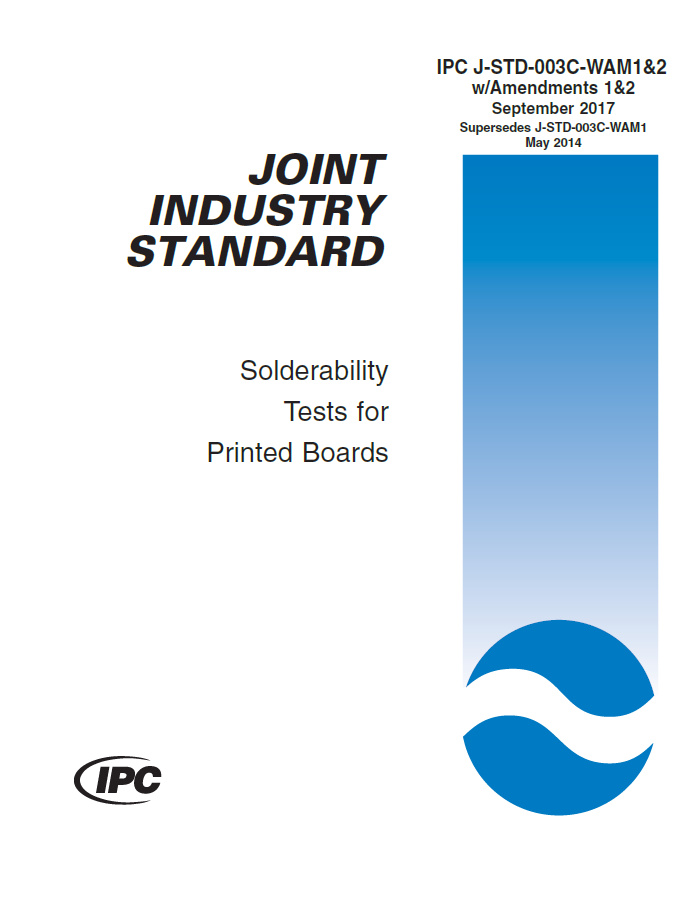
IPC-J-STD-003 - Revision C - With Amendment 1-2
Solderability Tests for Printed Boards
| Standard Number: | IPC-J-STD-003 - Revision C - With Amendment 1-2 |
| DOD Adopted: | No |
| ANSI Approved: | No |
| Revision: | C |
| Released: | 01.09.2017 |
| ISBN (English): | 978-1-61193-321-5 |
| Pages (English): | 48 |
| ISBN (Japanese): | 978-1-951577-86-5 |
| Pages (Japanese): | 48 |
| ISBN (Chinese): | 978-1-61193-229-4 |
| Pages (Chinese): | 27 |
Superseded by IPC-J-STD-003-Revision-D
The IPC-J-STD-003C-WAM1&2 standard prescribes test methods, defect definitions and illustrations for assessing the solderability of printed board surface conductors, attachment lands and plated-through holes (PTHs). The IPC-J-STD-003C-WAM1&2 standard is not intended to verify the potential of successful processing at assembly or to evaluate design impact on wettability. The IPC-J-STD-003C-WAM1&2 standard describes procedures or methods to determine the acceptable wettability of a finish. Wettability can be affected by handling, finish application and environmental conitions. This standard describes solderability determinations that are made to verify that the printed board fabrication processes and subsequent storage have had no adverse effect on the solderability of those portions of the printed board intended to be soldered. Reference coupons or representative portions of a printed board may be used. Solderability is determined by evaluation of a test specimen which has been processed as part of a panel of boards and subsequently removed for testing per the method selected.
IPC-J-STD-003 - Revision C - With Amendment 1-2
Standard Number: IPC-J-STD-003 - Revision C - With Amendment 1-2
Name: Solderability Tests for Printed Boards
Released: 01.09.2017
DOD Adopted: No
ANSI Approved: No
Revision: C
Overview
The IPC-J-STD-003 - Revision C - With Amendment 1-2 is a comprehensive standard that outlines the procedures for testing the solderability of printed boards. Released on September 1, 2017, this document is essential for ensuring the reliability and quality of solder connections in electronic assemblies. Although it is not DOD adopted or ANSI approved, it remains a critical resource for professionals in the electronics manufacturing industry.
Why Solderability Testing is Important
Solderability testing is a crucial step in the manufacturing process of printed circuit boards (PCBs). It ensures that the surfaces of the boards are adequately prepared to accept solder, which is vital for creating strong and reliable electrical connections. Poor solderability can lead to weak joints, which may result in product failures, increased warranty costs, and customer dissatisfaction. By adhering to the guidelines set forth in the IPC-J-STD-003, manufacturers can mitigate these risks and enhance the overall quality of their products.
Key Features of IPC-J-STD-003 - Revision C - With Amendment 1-2
- Comprehensive Testing Procedures: The standard provides detailed methodologies for conducting solderability tests, ensuring consistency and reliability in results.
- Updated Guidelines: With the inclusion of Amendment 1-2, the standard reflects the latest advancements and best practices in solderability testing.
- Focus on Quality: By following the procedures outlined in this standard, manufacturers can significantly improve the quality and reliability of their solder joints.
- Industry Relevance: Although not DOD adopted or ANSI approved, the standard is widely recognized and utilized within the electronics manufacturing industry.
Applications
The IPC-J-STD-003 - Revision C - With Amendment 1-2 is applicable to a wide range of industries that rely on printed circuit boards, including:
- Consumer Electronics: Ensuring the reliability of solder joints in devices such as smartphones, tablets, and laptops.
- Automotive: Critical for the performance and safety of electronic systems in modern vehicles.
- Aerospace: Essential for the reliability of electronic components in aircraft and spacecraft.
- Medical Devices: Ensures the dependability of life-saving equipment and diagnostic tools.
Benefits of Using IPC-J-STD-003 - Revision C - With Amendment 1-2
Adopting the IPC-J-STD-003 - Revision C - With Amendment 1-2 standard offers numerous benefits, including:
- Enhanced Product Reliability: By ensuring strong solder joints, manufacturers can reduce the likelihood of product failures and improve customer satisfaction.
- Cost Savings: Reducing the incidence of defects and rework can lead to significant cost savings in the manufacturing process.
- Competitive Advantage: Companies that adhere to industry standards are often viewed as more reliable and trustworthy by customers and partners.
- Compliance and Standardization: Following established standards helps ensure compliance with industry regulations and promotes standardization across manufacturing processes.
Conclusion
The IPC-J-STD-003 - Revision C - With Amendment 1-2 is an indispensable resource for any organization involved in the production of printed circuit boards. By providing clear and detailed guidelines for solderability testing, this standard helps manufacturers ensure the quality and reliability of their products. Whether you are in the consumer electronics, automotive, aerospace, or medical device industry, adhering to this standard can lead to improved product performance, reduced costs, and a stronger reputation in the marketplace.