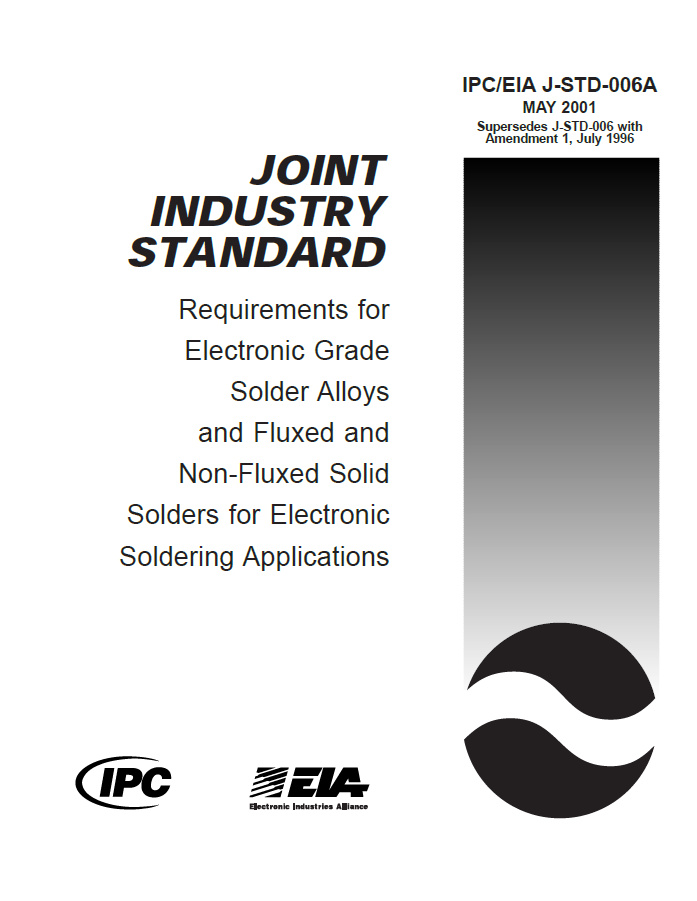
IPC-J-STD-006 - Revision A
Requirements for Electronic Grade Solder Alloys and Fluxed and Non-Fluxed Solid Solders for Electronic Soldering Applications
| Standard Number: | IPC-J-STD-006 - Revision A |
| DOD Adopted: | No |
| ANSI Approved: | No |
| Revision: | A |
| Released: | 01.05.2001 |
| Pages (English): | 28 |
IPC-J-STD-006 - Revision A
Welcome to the world of precision and reliability with the IPC-J-STD-006 - Revision A, a comprehensive standard that sets the benchmark for electronic grade solder alloys and fluxed and non-fluxed solid solders used in electronic soldering applications. Released on May 1, 2001, this standard is a cornerstone for ensuring quality and consistency in soldering processes across the electronics industry.
Overview of IPC-J-STD-006 - Revision A
The IPC-J-STD-006 - Revision A is a meticulously crafted document that outlines the requirements for solder alloys and solid solders, both fluxed and non-fluxed, specifically designed for electronic soldering applications. This standard is essential for manufacturers, engineers, and quality assurance professionals who are committed to maintaining the highest standards of product reliability and performance.
Key Features and Benefits
- Comprehensive Guidelines: The standard provides detailed specifications for electronic grade solder alloys, ensuring that all materials meet stringent quality requirements.
- Versatility: Applicable to a wide range of soldering applications, this standard is versatile and adaptable to various manufacturing processes.
- Quality Assurance: By adhering to this standard, manufacturers can ensure consistent product quality, reducing the risk of defects and enhancing overall reliability.
- Industry Recognition: Although not adopted by the Department of Defense (DOD) or approved by ANSI, the standard is widely recognized and respected within the electronics industry.
Technical Specifications
The IPC-J-STD-006 - Revision A standard number is a testament to its precision and attention to detail. It encompasses a range of technical specifications that are crucial for the effective application of solder alloys in electronic manufacturing. These specifications include:
- Standard Number: IPC-J-STD-006 - Revision A
- Name: Requirements for Electronic Grade Solder Alloys and Fluxed and Non-Fluxed Solid Solders for Electronic Soldering Applications
- Released: 01.05.2001
- DOD Adopted: No
- ANSI Approved: No
- Revision: A
Why Choose IPC-J-STD-006 - Revision A?
Choosing the IPC-J-STD-006 - Revision A standard means choosing a path of excellence and reliability. This standard is not just a set of guidelines; it is a commitment to quality and precision in every soldering application. By implementing this standard, you are ensuring that your products meet the highest industry standards, thereby enhancing customer satisfaction and trust.
Moreover, the standard's comprehensive nature means that it covers a wide array of soldering scenarios, making it an invaluable resource for any organization involved in electronic manufacturing. Whether you are a small-scale manufacturer or a large corporation, the IPC-J-STD-006 - Revision A provides the framework you need to achieve superior results.
Conclusion
In the fast-paced world of electronics manufacturing, staying ahead of the competition requires adherence to the highest standards of quality and reliability. The IPC-J-STD-006 - Revision A is your partner in achieving these goals. With its detailed guidelines and comprehensive specifications, this standard is an essential tool for any organization committed to excellence in electronic soldering applications.
Embrace the precision and reliability that comes with the IPC-J-STD-006 - Revision A and take your soldering processes to the next level. Ensure that your products not only meet but exceed industry expectations, delivering unparalleled performance and quality to your customers.