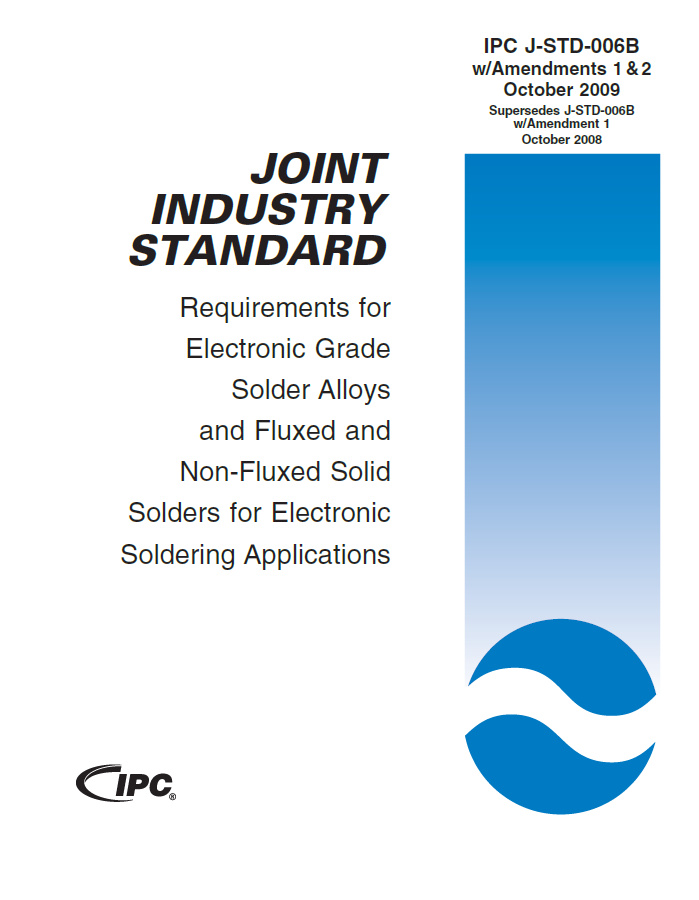
IPC-J-STD-006 - Revision B - With Amendment 1-2
Requirements for Electronic Grade Solder Alloys and Fluxed and Non-Fluxed Solid Solders for Electronic Soldering Applications
| Standard Number: | IPC-J-STD-006 - Revision B - With Amendment 1-2 |
| DOD Adopted: | No |
| ANSI Approved: | No |
| Revision: | B |
| Released: | 22.10.2009 |
| Pages (English): | 36 |
| ISBN (Chinese): | 978-1-61193-005-4 |
| Pages (Chinese): | 32 |
Latest revision for IPC-J-STD-006 is here
This standard prescribes the nomenclature, requirements and test methods for electronic grade solder alloys; for fluxed and non-fluxed bar, ribbon and powder solders for electronic soldering applications; and for ‘‘special’’ electronic grade solders. This is a quality control standard and is not intended to relate directly to the material’s performance in the manufacturing process. Solders for applications other than electronics should be procured using ASTM B-32.
This standard is one of a set of three joint industry standards that prescribe the requirements and test methods for soldering materials to be used in the electronics industry. The other two standards in this set are IPC/EIA J-STD-004, Requirements for Soldering Fluxes, and IPC/EIA J-STD-005, Requirements for Soldering Pastes. 29 pages. Released October 2009.
Amendments 1 and 2 included in this J-STD-006B modify the following:
-
Add reference to IPC/JEDEC J-STD-609, Lead-Free and Leaded Marking,Symbols and Labels
-
Clarify the meaning of those alloys that are designated as lead-free
-
Provide guidance to suppliers how to designate and mark lead-free alloys
-
Correct the required maximum levels of lead (Pb) and antimony (Sb) allowed as impurities in section 3.3 Alloy Impurities
-
Transfer all information references on solder powder particle size distribution and solder paste products to IPC J-STD-005, Requirements for Solder Pastes
-
Remove Table 3-1 “Particle Size Distributions of Standard Solder Powders”
-
Change the information contained in Table A-1 “Composition and Temperature Characteristics of Lead-free Solder 8. Alloys” (contained in Appendix A “Solder Alloys”) and
Establish a consistent maximum contaminant level requirement within Appendix B-1 for the elements of silver (Ag), lead (Pb) and antimony (Sb)
IPC-J-STD-006 - Revision B - With Amendment 1-2
Welcome to the world of precision and excellence in electronic soldering applications with the IPC-J-STD-006 - Revision B - With Amendment 1-2. This comprehensive standard is your ultimate guide to understanding the requirements for electronic grade solder alloys, as well as fluxed and non-fluxed solid solders. Released on October 22, 2009, this document is a cornerstone for professionals seeking to ensure quality and reliability in their soldering processes.
Overview of the Standard
The IPC-J-STD-006 - Revision B - With Amendment 1-2 is a meticulously crafted standard that outlines the essential requirements for electronic grade solder alloys. It is designed to cater to the needs of industries that demand precision and consistency in soldering applications. Whether you are involved in manufacturing, quality assurance, or research and development, this standard provides the guidelines necessary to achieve optimal results.
Key Features
- Comprehensive Coverage: This standard covers a wide range of solder alloys, ensuring that you have access to the most relevant and up-to-date information for your specific applications.
- Fluxed and Non-Fluxed Solders: Gain insights into both fluxed and non-fluxed solid solders, allowing you to make informed decisions based on your unique requirements.
- Detailed Specifications: With precise specifications, this standard helps you maintain consistency and quality in your soldering processes.
- Amendments for Enhanced Clarity: The inclusion of Amendment 1-2 ensures that you have the latest updates and clarifications, enhancing your understanding and application of the standard.
Why Choose IPC-J-STD-006 - Revision B - With Amendment 1-2?
Choosing the right standard is crucial for achieving excellence in electronic soldering applications. Here are some compelling reasons why the IPC-J-STD-006 - Revision B - With Amendment 1-2 should be your go-to resource:
Unmatched Expertise
Developed by industry experts, this standard reflects the collective knowledge and experience of professionals who understand the intricacies of electronic soldering. By adhering to this standard, you align your processes with industry best practices, ensuring superior results.
Enhanced Quality Assurance
Quality is paramount in electronic soldering, and this standard provides the framework to achieve it. By following the guidelines outlined in the IPC-J-STD-006 - Revision B - With Amendment 1-2, you can enhance the quality assurance processes within your organization, leading to improved product reliability and customer satisfaction.
Stay Ahead of the Curve
In a rapidly evolving industry, staying updated with the latest standards is essential. The inclusion of Amendment 1-2 ensures that you have access to the most current information, allowing you to stay ahead of the competition and adapt to changing industry demands.
Applications and Benefits
The IPC-J-STD-006 - Revision B - With Amendment 1-2 is applicable across a wide range of industries and offers numerous benefits:
Industries Served
- Electronics Manufacturing: Ensure the highest quality in your electronic components with precise soldering standards.
- Automotive Industry: Enhance the reliability and performance of automotive electronics through consistent soldering practices.
- Aerospace and Defense: Meet stringent industry requirements with soldering standards that prioritize safety and reliability.
- Telecommunications: Achieve seamless connectivity and performance in telecommunications equipment with superior soldering techniques.
Key Benefits
- Improved Product Reliability: By adhering to the standard, you can enhance the reliability and longevity of your electronic products.
- Cost Efficiency: Minimize rework and defects, leading to cost savings and increased profitability.
- Regulatory Compliance: Ensure compliance with industry regulations and standards, reducing the risk of non-compliance penalties.
- Customer Satisfaction: Deliver high-quality products that meet or exceed customer expectations, fostering trust and loyalty.
Conclusion
In conclusion, the IPC-J-STD-006 - Revision B - With Amendment 1-2 is an indispensable resource for professionals involved in electronic soldering applications. With its comprehensive coverage, detailed specifications, and expert insights, this standard empowers you to achieve excellence in your soldering processes. Whether you are striving for improved quality, enhanced reliability, or regulatory compliance, this standard provides the guidance you need to succeed.
Embrace the power of precision and elevate your soldering applications with the IPC-J-STD-006 - Revision B - With Amendment 1-2. Stay ahead of the competition, enhance your product quality, and ensure customer satisfaction by integrating this standard into your processes today.