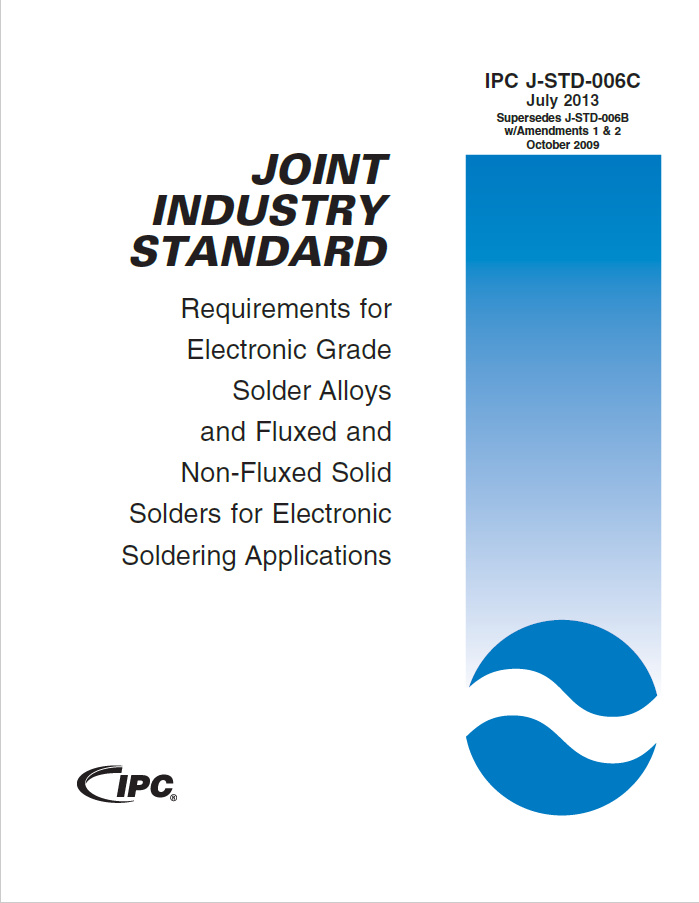
IPC-J-STD-006 - Revision C
Requirements for Electronic Grade Solder Alloys and Fluxed and Non-Fluxed Solid Solders for Electronic Soldering Applications
| Standard Number: | IPC-J-STD-006 - Revision C |
| DOD Adopted: | No |
| ANSI Approved: | No |
| Revision: | C |
| Released: | 12.08.2013 |
| ISBN (English): | 978-1-61193-104-4 |
| Pages (English): | 36 |
| ISBN (Chinese): | 978-1-61193-141-9 |
| Pages (Chinese): | 22 |
| ISBN (Japanese): | 978-1-61193-495-3 |
| Pages (Japanese): | 36 |
Amendment to IPC-J-STD-006 - Revision C is available here
This standard prescribes the nomenclature, requirements and test methods for electronic grade solder alloys; for fluxed and non-fluxed bar, ribbon and powder solders for electronic soldering applications; and for ‘‘special’’ electronic grade solders. This is a quality control standard and is not intended to relate directly to the material’s performance in the manufacturing process. Solders for applications other than electronics should be procured using ASTM B-32.
This standard is one of a set of three joint industry standards that prescribe the requirements and test methods for soldering materials to be used in the electronics industry. The other two standards in this set are IPC/EIA J-STD-004, Requirements for Soldering Fluxes, and IPC/EIA J-STD-005, Requirements for Soldering Pastes
This "C" revision has been updated to address intentional additions to a solder alloy and impurities in the alloy. In addition, the tables and appendices have been updated with the latest alloy information. 36 pages. Released July 2013.
IPC-J-STD-006 - Revision C
Welcome to the world of precision and reliability with the IPC-J-STD-006 - Revision C, a comprehensive standard that sets the benchmark for electronic grade solder alloys and fluxed and non-fluxed solid solders used in electronic soldering applications. Released on August 12, 2013, this standard is a pivotal resource for professionals in the electronics manufacturing industry, ensuring quality and consistency in soldering processes.
Overview of IPC-J-STD-006 - Revision C
The IPC-J-STD-006 - Revision C is a meticulously crafted document that outlines the requirements for electronic grade solder alloys. It is designed to provide manufacturers and engineers with the necessary guidelines to ensure that their soldering materials meet the highest standards of quality and performance. This standard is essential for anyone involved in the production or use of soldering materials in the electronics industry.
Key Features
- Standard Number: IPC-J-STD-006 - Revision C
- Name: Requirements for Electronic Grade Solder Alloys and Fluxed and Non-Fluxed Solid Solders for Electronic Soldering Applications
- Released: August 12, 2013
- DOD Adopted: No
- ANSI Approved: No
- Revision: C
Why Choose IPC-J-STD-006 - Revision C?
Choosing the IPC-J-STD-006 - Revision C standard means opting for a document that is the result of extensive research and collaboration among industry experts. This standard is not just a set of guidelines; it is a commitment to excellence in electronic soldering applications. Here are some reasons why this standard is indispensable:
Ensures Quality and Consistency
By adhering to the IPC-J-STD-006 - Revision C, manufacturers can ensure that their soldering materials are consistent in quality, leading to reliable and durable electronic products. This consistency is crucial in maintaining the integrity of electronic assemblies and preventing failures.
Comprehensive Guidelines
This standard provides comprehensive guidelines that cover a wide range of soldering materials, including both fluxed and non-fluxed solid solders. It addresses the specific requirements for electronic grade solder alloys, ensuring that all aspects of soldering materials are covered.
Industry-Recognized Standard
Although not adopted by the Department of Defense (DOD) or approved by the American National Standards Institute (ANSI), the IPC-J-STD-006 - Revision C is widely recognized within the electronics industry. It is a testament to the standard's credibility and the trust that industry professionals place in it.
Applications of IPC-J-STD-006 - Revision C
The applications of the IPC-J-STD-006 - Revision C are vast and varied, making it an essential tool for a wide range of industries. Here are some of the key applications:
Electronics Manufacturing
In the electronics manufacturing industry, the quality of soldering materials is paramount. The IPC-J-STD-006 - Revision C provides the necessary guidelines to ensure that soldering materials meet the highest standards, leading to reliable and high-performance electronic products.
Research and Development
For research and development teams working on new electronic products, the IPC-J-STD-006 - Revision C serves as a valuable resource. It provides the necessary information to develop soldering materials that meet industry standards, ensuring that new products are both innovative and reliable.
Quality Assurance
Quality assurance teams can rely on the IPC-J-STD-006 - Revision C to verify that soldering materials meet the required standards. This ensures that electronic products are free from defects and perform as expected, reducing the risk of product failures and recalls.
Conclusion
In conclusion, the IPC-J-STD-006 - Revision C is an indispensable standard for anyone involved in the electronics industry. Its comprehensive guidelines and focus on quality and consistency make it a valuable resource for manufacturers, engineers, and quality assurance teams alike. By adhering to this standard, you can ensure that your soldering materials meet the highest standards, leading to reliable and high-performance electronic products.
Embrace the precision and reliability of the IPC-J-STD-006 - Revision C and take your electronic soldering applications to the next level.
Requirements for Electronic Grade Solder Alloys and Fluxed and Non-Fluxed Solid Solders for Electronic Soldering Applications