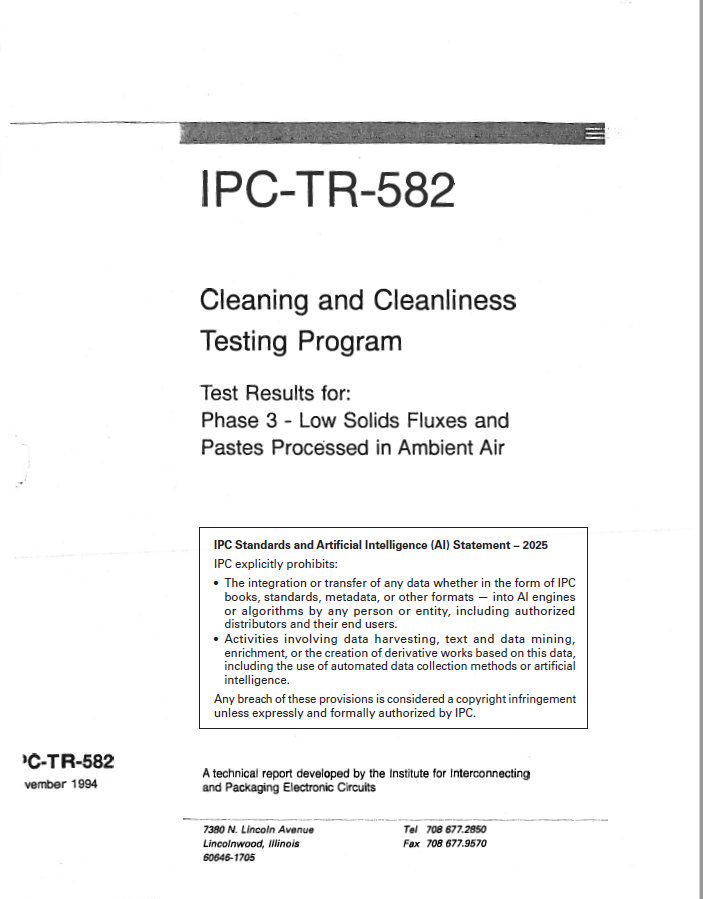
IPC-TR-582 - Standard Only
Cleaning & Cleanliness Test Program for Phase 3-Low Solids Fluxes & Pastes Processed in Ambiant Air
| Standard Number: | IPC-TR-582 - Standard Only |
| DOD Adopted: | No |
| ANSI Approved: | No |
| Released: | 01.10.2017 |
| ISBN (English): | 1-580981-70-4 |
| Pages (English): | 168 |
Scanned document!
This document details the test procedures, test results and team conclusions for the IPC Cleaning and Cleanliness Testing Program, Phase 3, Low Solids Flux in Ambient Air. This effort has been part of a multi-stage program to investigate material and process alternatives to the use of chlorofluorocarbons (CFCs) in electronics manufacturing. This Phase 3 effort has been dedicated to characterizing the cleanliness aspects of low solids fluxes, sometimes referred to as "no-clean" fluxes. Not available in electronic format. 163 pages. Released November 1994.
IPC-TR-582 - Standard Only
The IPC-TR-582 - Standard Only is an essential document for professionals in the electronics manufacturing industry, focusing on the critical aspects of cleaning and cleanliness testing. This standard is specifically designed for Phase 3-Low Solids Fluxes & Pastes processed in ambient air, providing comprehensive guidelines and methodologies to ensure optimal cleanliness levels in electronic assemblies.
Overview
Released on October 1, 2017, the IPC-TR-582 standard is a pivotal resource for manufacturers aiming to maintain high-quality standards in their production processes. Although it is not DOD adopted or ANSI approved, its relevance and applicability in the industry remain significant. This standard is a testament to IPC's commitment to advancing the electronics industry by providing robust frameworks for quality assurance.
Key Features
- Comprehensive Guidelines: The IPC-TR-582 offers detailed instructions on cleaning and cleanliness testing, ensuring that electronic assemblies meet stringent quality requirements.
- Focus on Low Solids Fluxes & Pastes: This standard is tailored for processes involving low solids fluxes and pastes, which are increasingly used in modern electronics manufacturing due to their efficiency and reduced environmental impact.
- Ambient Air Processing: The guidelines are specifically designed for processes conducted in ambient air, making them highly relevant for a wide range of manufacturing environments.
Benefits of IPC-TR-582
Implementing the IPC-TR-582 standard in your manufacturing processes can lead to numerous benefits, including:
- Enhanced Product Quality: By adhering to the cleanliness guidelines, manufacturers can significantly improve the reliability and performance of their electronic products.
- Reduced Defects: Proper cleaning and testing reduce the likelihood of defects caused by contaminants, leading to fewer returns and warranty claims.
- Compliance and Reputation: Following industry standards like IPC-TR-582 demonstrates a commitment to quality and can enhance your company's reputation among clients and partners.
Why Choose IPC-TR-582?
The IPC-TR-582 standard is an invaluable tool for any organization involved in the production of electronic assemblies. Its focus on low solids fluxes and pastes processed in ambient air makes it particularly relevant for modern manufacturing processes that prioritize efficiency and environmental responsibility. By integrating this standard into your operations, you can ensure that your products meet the highest cleanliness standards, thereby enhancing their reliability and performance.
Conclusion
In the fast-paced world of electronics manufacturing, maintaining high standards of cleanliness is crucial for ensuring product quality and reliability. The IPC-TR-582 - Standard Only provides a comprehensive framework for achieving these standards, making it an indispensable resource for manufacturers. Whether you are looking to improve your current processes or establish new ones, this standard offers the guidance you need to succeed in today's competitive market.